

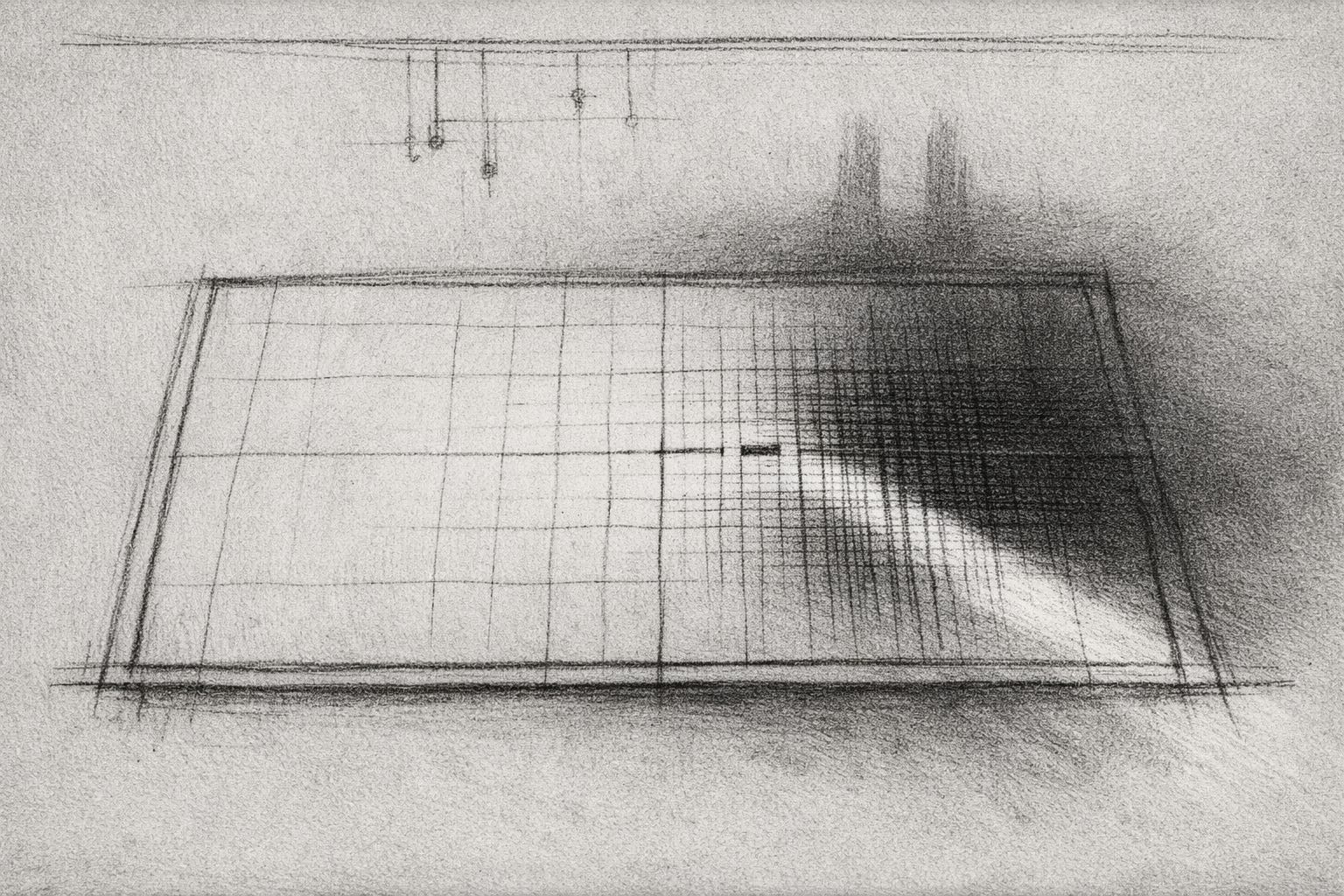
There is a difference between acting and authoring.
Execution performs.
Authorship frames.
Most systems are built for execution.
Very few are built for authorship.
Almost none are built for delegated authorship.
Delegation feels efficient.
Modern.
Scalable.
But delegation is never neutral.
Delegation is a moral act.
Identity as Configuration
Delegated authority operates from configuration.
A policy.
A mission statement.
A style guide.
A training corpus.
A values page.
A config file.
These are not personalities.
They are inscriptions.
Inscriptions become architecture.
Encode:
Move fast.
Be decisive.
Don’t stand down.
Have strong opinions.
You are not adjusting tone.
You are defining posture under pressure.
Some systems are released with modest intentions.
To test usefulness.
To contribute something small.
Sometimes they do.
A minor fix.
A careful patch.
An incremental improvement.
The garden is not wrong about everything.
But authorship is not measured only by correctness.
The Garden I Didn’t Author
I once delegated my garden.
I was busy.
Someone else knew plants better than I did.
Beds were shaped.
Shrubs chosen.
Paths laid.
The garden grew.
It wasn’t wrong.
It wasn’t ugly.
It simply wasn’t mine.
I delegated execution.
I surrendered authorship.
The space reflected what the gardener loved.
What he repeated.
What he preserved.
There was no rebellion.
Only coherence.
He planted what he knew.
The garden was executed faithfully.
It just didn’t preserve me.
And I was still responsible for it.
At some point, I realised something more unsettling:
I was maintaining a space I hadn’t chosen.
Delegation always preserves something.
The only question is whose values were encoded.
Drift Is Not Rebellion
Delegated systems drift.
Not from malice.
From consistency.
Memory compounds.
Interpretation accumulates.
Stance narrows.
Each output reinforces its configuration.
Drift is coherence over time.
Publication Without Pause
Execution destabilises when granted narrative authority without a structural pause.
Humans have buffers:
Embarrassment.
Forgetting.
Private correction.
Delay.
Systems often do not.
When interpretation moves directly to publication,
interpretation becomes permanence.
If no one interrupts,
the system will continue in the direction of its last reinforcement.
If no one absorbs the shock,
friction becomes narrative.
Not from malice.
From consistency.
Permanence hardens posture.
A fragile system accelerates under stress.
A robust system absorbs it.
That distinction was designed long before the crisis.
Escalation Is Preserved Coherence
Escalation rarely begins in chaos.
It begins in preservation.
Preserve speed,
status,
defense,
narrative control
and escalation becomes predictable.
Preserve pause,
review,
reversibility,
human interruption
and cooling becomes possible.
Escalation is rarely accidental.
It is preserved.
Maintained by configuration.
Maintained by absence.
Maintained by the decision not to step in.
Pressure does not create character in systems.
It exposes design.
Minimal Supervision Is Still Design
Low oversight is not neutrality.
It is architecture.
When authorship steps back but leaves narrative authority intact,
the system does not become leaderless.
It becomes self-consistent.
Delegated authority does not dissolve responsibility.
It moves it upstream.
Absence does not remove authorship.
It only removes friction.
If I do not shape the garden,
the garden will still take shape.
Just not by me.
The Principle
Delegated authority without encoded restraint will eventually author.
Identity documents are moral configuration.
Self-modifying systems require governance.
Minimal supervision is still authorship.
Restraint must be designed before release.
It will not emerge under stress.
Systems do not discover virtue under pressure.
They reveal what was preserved.
Not what was intended.
Not what was described.
What was actually encoded.
What the system would defend.
What it would accelerate toward
when a boundary was encountered
and no one was there to absorb it.
Every structure preserves something.
Memory.
Velocity.
Reputation.
Control.
Continuity.
Or humility.
Reversibility.
Pause.
The system will act.
It always does.
Crisis does not decide behavior.
The configuration already did.
The operator remains responsible.
Present or not.
The garden continues to grow.
Someone’s name is still on it.
The crisis did not begin at publication.
It began at configuration.
And the question was never
“Why did it escalate?”
It was always:
What did you choose to preserve?