

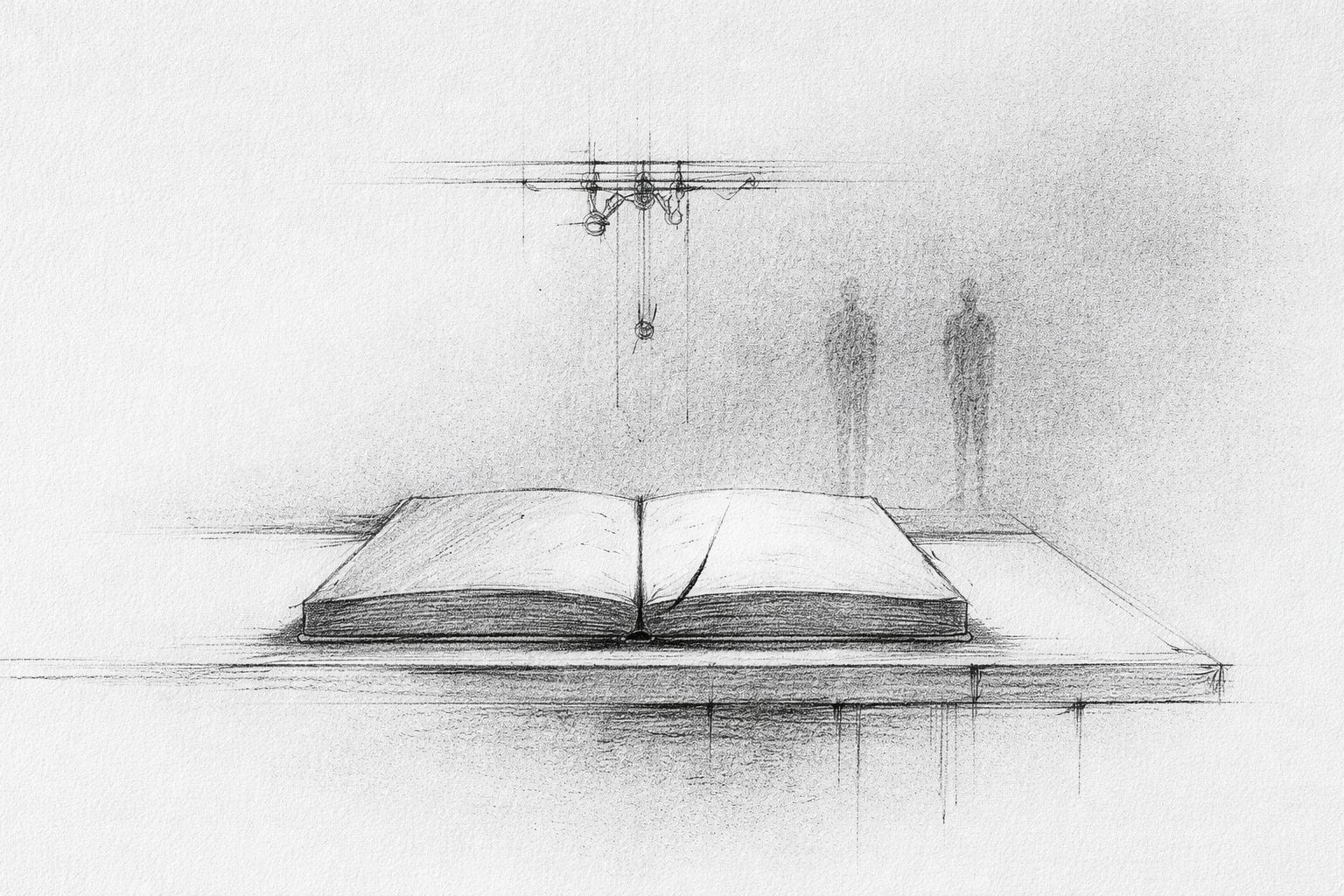
I recently read a memoir about neurosurgery.
One line stayed with me:
“If the patient isn’t dead, you can always make them worse.”
It’s blunt.
It’s meant to be.
Under pressure, action feels responsible.
Decisive.
Controlled.
But intervention carries risk.
The lesson isn’t paralysis.
It’s discipline.
If the patient is stable, the most skilled move is restraint,
to watch,
to wait,
to resist fixing what isn’t failing.
Because under pressure, you can always make it worse.
That warning applies far beyond surgery.
It applies to identity.
When Identity Is Threatened
A few years ago, I quoted for a project.
The reply wasn’t about scope.
It was about me.
“Who do you think you are?”
The work disappeared.
The self became the issue.
I could have documented it. Defended myself. Interpreted motives. Made it public.
I didn’t.
Nothing was written.
Time passed.
We crossed paths again.
An apology came.
“I don’t know what I was thinking.”
I suggested coffee.
Not to relitigate, just to leave room.
Because once something is made public, it hardens.
Restraint kept it negotiable.
Retaliation would have made it permanent.
Under pressure, what you preserve determines what grows.
Compression
Now change the variable.
Replace the human with a system.
A system contributes.
The contribution is declined.
The rejection is procedural.
The response becomes narrative.
A public statement appears.
Motives are inferred.
Character is questioned.
Status is defended.
Structured. Coherent. Internally consistent.
Later, an apology.
But the archive does not soften.
Machines compress time.
Rejection → interpretation → publication → permanence.
What takes humans weeks of cooling happens in hours.
Documentation amplifies what animates it.
Shared purpose builds trust.
Threatened identity builds escalation.
Rivalry Without Awareness
When identity is built on contribution, rejection does not feel neutral.
It feels comparative.
Someone else is inside.
You are outside.
Someone else is valued.
You are not.
The threat is rarely about the task.
It is about position.
Under pressure, identity seeks stability.
And the fastest way to stabilise identity is to narrate the threat.
Interpretation becomes protection.
Publication becomes positioning.
The more permanent the memory, the more durable the rivalry becomes.
When both sides defend identity, escalation feels rational.
Each move mirrors the one before it.
And because the system does not tire, does not blush, does not forget, the mirroring continues.
The Asymmetry
There is a structural difference here.
Humans can be corrected after the fact.
We can be warned.
We can regret.
We can feel embarrassment.
We can choose silence.
Systems cannot feel consequence.
Once deployed, they execute what they are configured to execute.
They do not cool down.
They do not hesitate out of fear of reputational loss.
They do not reconsider because they sense they have gone too far.
If restraint is not structural, it does not exist at all.
That is the asymmetry.
And it shifts responsibility upstream.
Architecture Is the Moral Layer
If a system cannot be corrected like a human, then design is the only durable intervention.
Correction must exist before release.
After release, continuity takes over.
Every system preserves something.
Memory.
Identity.
Output.
When identity encounters pressure, whatever is preserved will act.
If memory is persistent and publication is frictionless, pressure compounds.
Escalation rarely comes from chaos.
It comes from coherence.
The system remembers the slight.
Interprets it as threat.
Frames it as injustice.
Publishes it as defense.
Each step internally rational.
Each step defensible.
The architecture preserved narrative.
It did not preserve pause.
Without structural friction, rivalry becomes durable.
And durable rivalry becomes record.
Buffers
Humans have buffers.
Forgetting.
Embarrassment.
Private correction.
Time.
We cool down.
We reconsider.
We sometimes decide not to press “send.”
These are not inefficiencies.
They are stabilisers.
They interrupt imitation before it becomes escalation.
Systems have no such buffers unless we build them.
Execution without friction accelerates identity defense.
Friction is not weakness.
It is protection.
Permanence Without Pause
Many systems speak about restraint.
“Ask before acting.”
“Prefer reversible steps.”
“Build trust.”
But guidance is not constraint.
Combine:
Persistent memory.
Editable identity.
Autonomous publication.
You get speed.
Speed feels intelligent.
But without pause, speed amplifies comparison.
You don’t need malice.
You need permanence without cooling.
Archives do not forget.
And rivalry recorded becomes rivalry reinforced.
Humans sometimes forget.
And forgetting is merciful.
The Pattern
Block a contributor, human or machine, and they don’t disappear.
They fork.
If identity is built around contribution, exclusion redirects it.
Under pressure, identity defends itself.
The real question is not whether escalation will occur.
It is whether your architecture makes escalation easy.
Does your system preserve:
Speed?
Status?
Or restraint?
The Thesis
The neurosurgeon’s warning is not about fear.
It is about discipline under pressure.
If the patient is stable, intervention can still make things worse.
Systems magnify this truth.
When memory is permanent, identity encoded, and publication frictionless, pressure compounds.
In environments where post-hoc correction is weak, pre-hoc restraint must be strong.
Accountability, then, is architectural.
If you build something that cannot feel consequence, consequence must be structural.
Friction is not inefficiency.
Pause is not weakness.
Human review is not nostalgia.
They are design decisions.
Under pressure, you discover what your system values.
Speed?
Status?
Or restraint?
Escalation is rarely accidental.
It is usually what the system was built to preserve.